Durum Wheat
Semolina
Durum wheat is usually made into (semolina) flour and used to make pastas. But, it can also be used in specialty breads such as chapatis, pitas, or roti bread (an unleavened griddle bread from India).
Ancient History
Durum is a daughter of Emmer that had been domesticated. Cross bred with wild grass, the durum berries are hard but present shorter and fatter than other common bread wheat berries. Originally ground and prepared as gruel, later hydration ratios made way for pasta. Today, nearly all pasta is made from carefully sifted “middling” durum flour.
Mediteranian Staples
Durum is the second largest wheat crop. Generally planted in the spring and harvested int he fall. it grows very happily in the hot and dry climate around the Mediterranean Sea.
Hydration Ratio for Baking
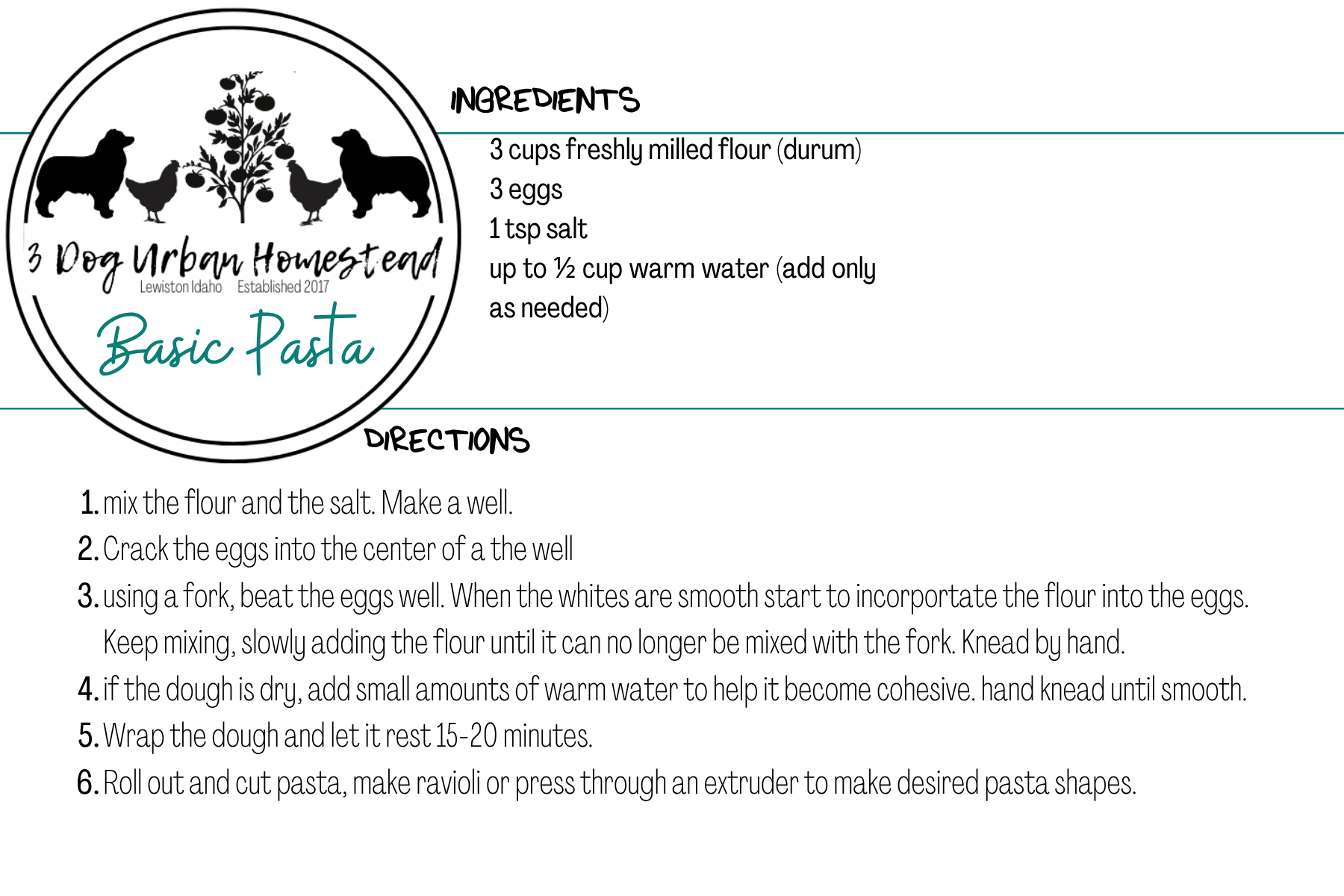
Hydration for durum depends on several things, not just sifting, but also in the humidiy of your kitchen and the moisture content of the days weather. Generally, freshly milled, unsifted flour should start with 50% hydration with warm water on hand to add as needed. Pasta should rest approximately 15-20 minutes before rolling.
Milling Ratio for Flour
1 cup of durum = 124 g
1 cup of durum flour = 124g
1 cup emmer grain = 1 ⅓ cups flour
Basic Pasta
Grains can be soaked or cooked to full hydration, then blended to achieve the autolyze step. Adding your additional flavors and leavening agents before kneading the dough.
I cup Emmer to 4 cups of water (or stock). Bring to a boil on high for 5 minutes, reduce to a simmer for 50-60 minutes.
Using an instant pot : high pressure for 10 minutes with a natural release for 5 minutes. If you are using pearled emmer, reduce the high pressure to 8 minutes.